Making Kashamochi 25 December 2025
An island delicacy
In the UK I was used to spending Christmas Day with my family. Almost all businesses are closed and the focus is on activities that can be done within the home and family. By contrast, in Japan Christmas is not a public holiday. Outside activities continue to be available. And so, Christmas 2025 found me attending a class on how to make kashamochi.
Kashamochi are a green and chewy sweet made from Japanese mugwort and fine rice flour, usually presented wrapped in green leaves. . Their texture is a bit like Turkish Delight, but perhaps somewhat firmer. They don’t feel like they will stick in your throat in the way that I find the more usual Japanese mochi which is also made in a similar from rice flour but without interesting additions like mugwort. Kashamochi invariably hand made and are considered an island delicacy. Although, they are on sale in many tourist oriented shops, I have never had to buy them since they are one of the items that are regularly handed around as gifts or offered to visitors.
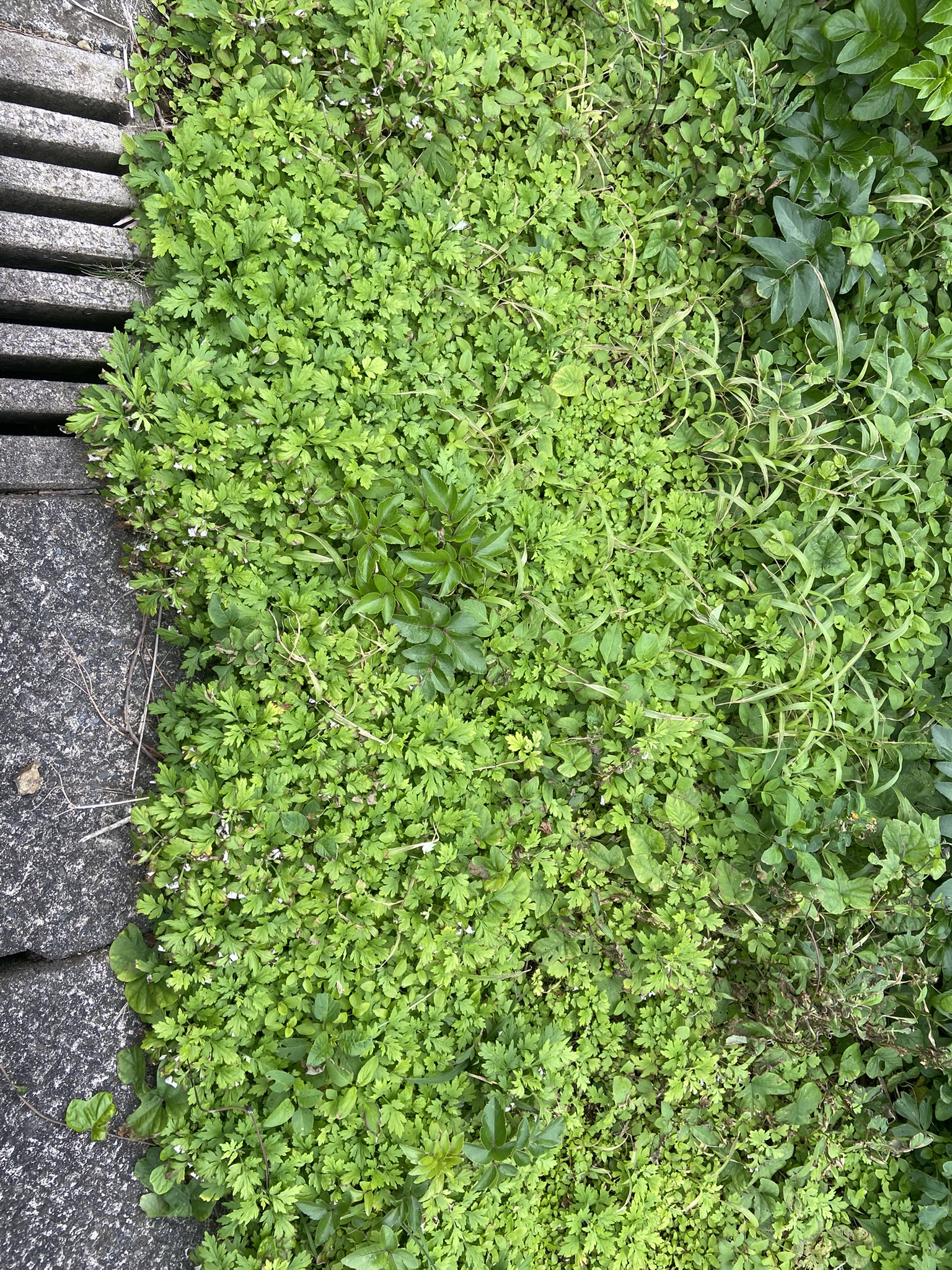
Mugwort grows all around the island, although it is frequently overwhelmed by other plants. I am told that people often leave space in their gardens or fields for it to grow, so that it is easily availble when needed.
Our teachers were a pair of experienced island ladies. Women of that age are frequently referred to as obasan (grandmother) even where they are not technically grandparents. I knew both of them from my social network in Akina (two villages over) where they lived. The rest of the students were women of various ages from various places on the island.
At the start of the class, one teacher explained that she had already pre-soaked the mugwort leaves. I think she said in soda water, for the effect of the acidity. She then put the leaves in a blender and then drained the pulp in a sieve. The result was very damp but sticky enough to clump together. . Someone in the class wondered what would have been done traditionally - blenders not being a traditional tool on Amami - the answer is that the leaves would be pounded with a wooden stick until the pulp was formed.
The recipe used equal quantities of Japanese mugwort, joushinko (上新粉), which is a fine flour made from non-glutinous rice and kokutou (黒糖), locally grown brown sugar. It is quite common to add sweet potato or other ingredients, but our teacher kept things simple for us with just the core three ingredients. First the sugar is gently mixed in by hand, followed by the rice flour. The sensation of hand mixing is hard to describe. You can feel the lumps of the sugar and crush them as they slowly dissolve into the mugwort then the rice absorbs the liquid and the mixture becomes firmer and firmer.
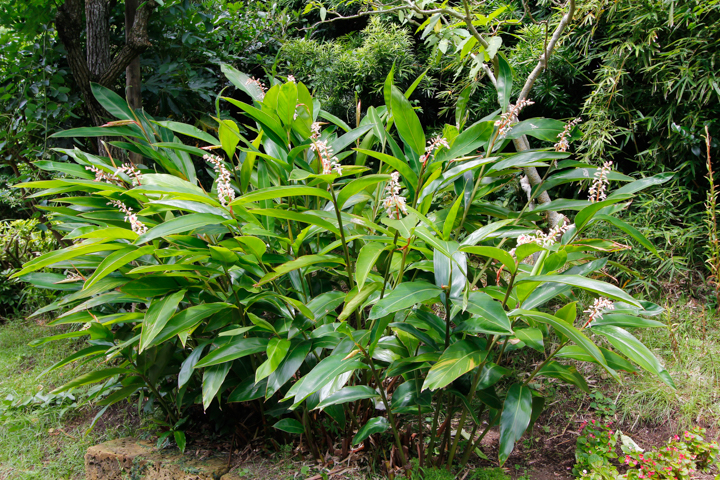
The next step is wrapping the result up in kasha leaves. When I asked what kasha was, everyone thought it was an island word for something else. I did some digging around and it is known in in standard Japanese as 熊竹蘭 (kumatakeran) - combining kanji meaning “bear”, “bamboo” and “orchid” and in English as “shell ginger”, the latter term leaving me none the wiser, though it is a relative of the ginger plant. When I asked where it grew I was told acchi kocchi which means “there and here”. Our teacher then emphasized the importance of finding plants with large enough leaves. Later research suggest there is another very similar plant known on the island as sa’nen or in mainland Japanese as gettou (月桃), which does indeed have smaller leaves and is equally common. For the botanically minded kasha is Alpinia × formosana and sa’nen is Alpinia zerumbet.
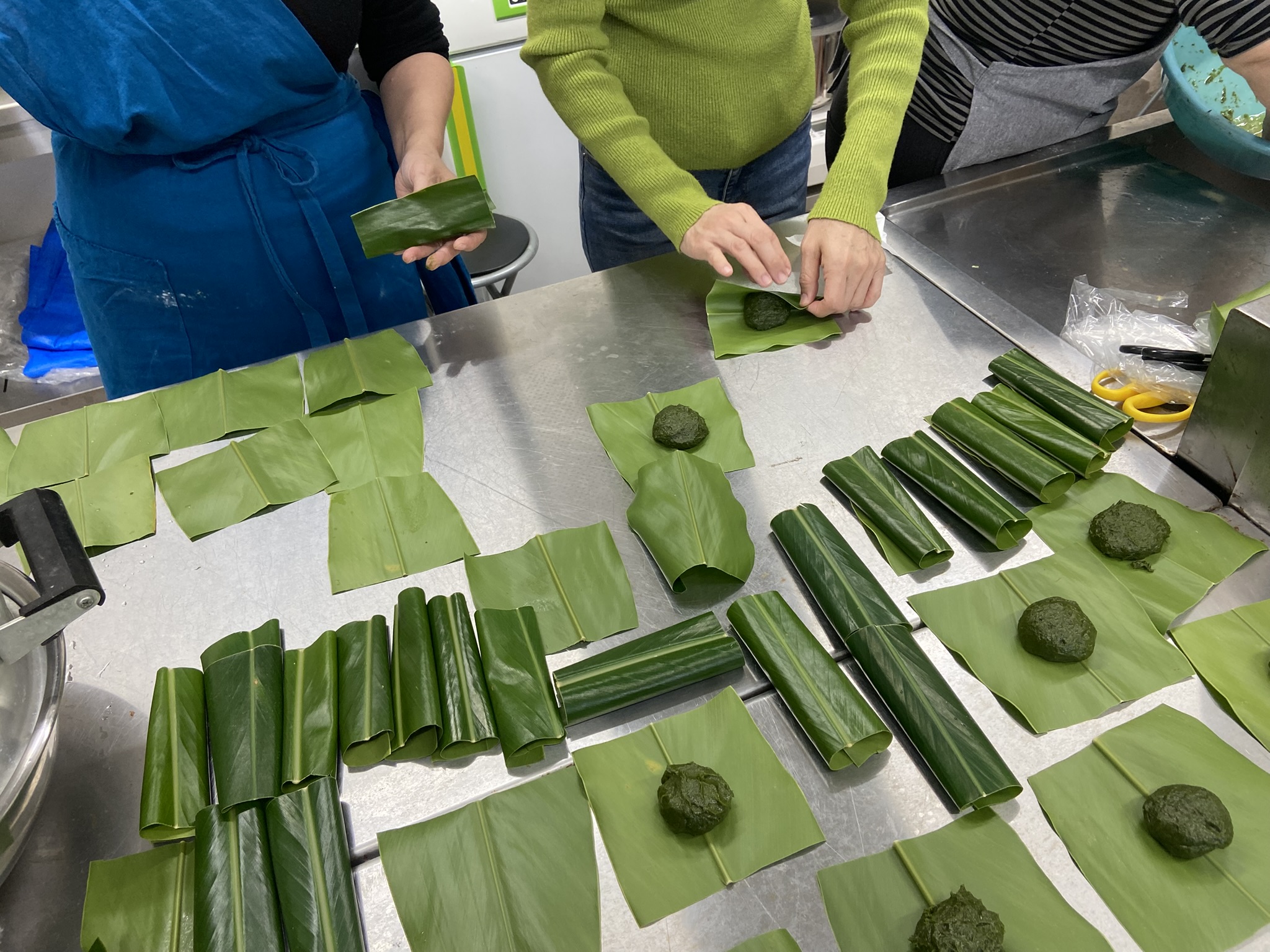
We washed neatly cut segments of the kasha leaves and then after wiping them dry, laid them out ready for the mochi. Then we hand rolled small balls of the mochi about 5cm in diameter which we placed in the centre of each leaf segment. After that we rolled them up gently, without squashing the mochi down and laid them in a steamer.
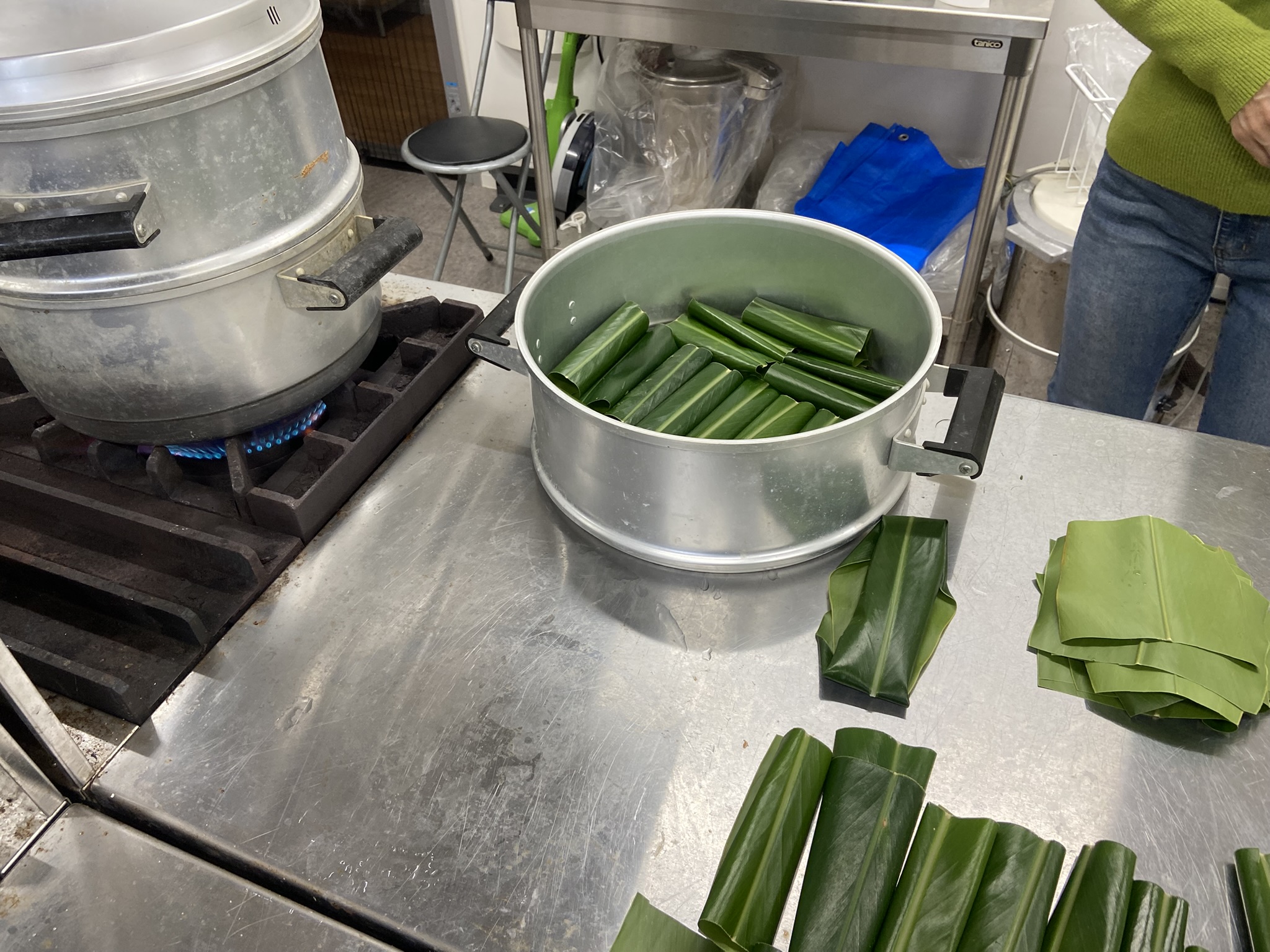
The teacher told us they should be steamed for “23 minutes”. If you have ever eaten kashamochi or anything else made from mugwort, you would recognise the smell given off by the steamer instantly. We took a break while the steaming took place and then the teacher distributed some for us to try. You eat them by peeling back the kasha leaves. Although I had often eaten them before, I had never had them hot and fresh, which in my view is doubly delightful.